
Smell gas right now?
Leave the switches alone, get everyone outside, turn the gas off at the meter if you safely can, and ring the gas emergency number on your gas bill. Call 000 if anyone is in danger. Our gas leaks page covers what happens next.
Signs you need a gas fitter
- A smell of gas near an appliance, the meter or a bottle.
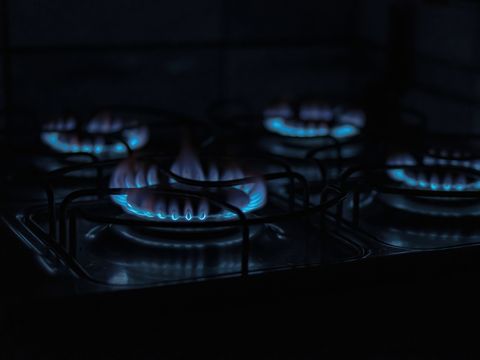
- Burner flames that are yellow, orange or lazy instead of blue.
- Soot or scorch marks around a heater, cooktop or flue.
- A pilot light that keeps going out, or an appliance that's hard to light.
- Headaches or drowsiness when a gas heater is running.
- A new appliance to connect, or an old one to take out.
The jobs gas fitters do
Most home gas work falls into a handful of jobs. Cooktops and ovens, swapped or moved. Bayonets for portable heaters and barbecues. Gas safety checks on pipes and appliances. LPG conversions between bottled gas and natural gas. And disconnecting gas when you go all electric.
Gas hot water has its own specialists: see gas hot water systems.
What a gas fitter will do
A gas fitter will check that the appliance matches your gas supply, natural gas or LPG, and that the pipe feeding it is big enough for everything on that line. They connect it, test the joins for leaks, light it and check the flame, and look at ventilation and clearances against the maker's instructions.
If an appliance is unsafe, a gas fitter may turn it off and tell you not to use it until it's repaired. Take that seriously.
What changes the job
Distance from the gas meter or the nearest gas line, and how the pipe gets there: under a timber floor is simpler than through a slab or a finished wall. Whether it's a straight swap or a new spot. Your gas type, and whether the appliance needs converting. Ventilation and clearances for heaters and cooktops.
Gas is never a DIY job
You can
- Find the gas meter and the valve that turns it off.
- Read the appliance's data plate for its model and gas type.
- If one appliance has stopped, check whether the others still work.
- Keep the manual and receipts for the gas fitter.
Leave to a licensed plumber
- Connecting, moving or disconnecting any gas appliance.
- Any gas pipe, fitting, regulator or bayonet.
- Converting an appliance between natural gas and LPG.
- Finding and fixing a gas leak.
Licences for gas work
Gas fitting needs a licence for the work. In NSW, gasfitting counts as "specialist work", and a contractor licence is needed for all specialist work "regardless of its cost". The ACT licenses gasfitters in their own classes, from journeyperson to advanced, with a separate LPG gasfitter class. In Western Australia, the state's online licence search covers gas fitting as well as plumbing.
Elsewhere, check the licence on your state's register; our guide to checking a licence shows where. Ask before the job what paperwork you'll get at the end, and see compliance certificates for why it matters.
Where the gas rules are changing
In Victoria, from 1 March 2027 a gas hot water system in an existing home that reaches the end of its life has to be replaced with an efficient electric one. Check current rules, and see Victoria's gas hot water rule. The Victorian Government says gas cooking in existing homes and heating for owner occupiers are unchanged, and that new homes will be built all electric from 1 January 2027.
In the ACT, new gas network connections have been blocked since 8 December 2023. Existing connections aren't affected.
Questions to ask the gas fitter
- Can I see your gas licence, and does it cover this work?
- Does this appliance suit my gas type, or does it need converting?
- Will you leak-test the whole line, or just the new join?
- What paperwork will I get when you finish?

What we would do
Use a licensed gas fitter for anything that touches gas, even a quick swap, and check the licence covers gas, not just plumbing. Someone who does your kind of gas job every week will spot a badly burning heater or an undersized pipe that another tradie might connect without a second look. We'll match you with a licensed gas fitter who does it.