
Jobs a plumber handles
- A dishwasher going in where there was none, or moving to a new spot.
- A fridge with an ice maker or water dispenser that needs a water line.
- An under-sink filter with its own tap through the benchtop.
- A boiling or chilled water tap.
- A washing machine in a new laundry position, or one that overflows at the drain.
- Water leaking under or behind an appliance after it was installed.
What a plumber will do
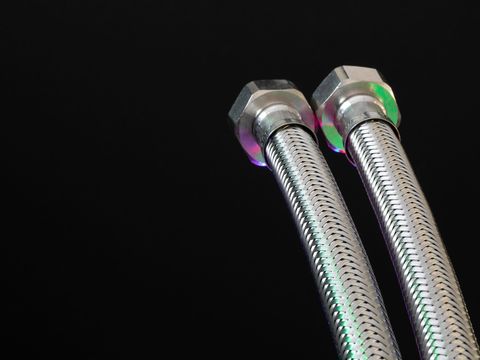
For a dishwasher, a plumber will fit a dedicated isolation valve or tap on the water line and connect the inlet hose. The drain hose goes to the sink waste at the loop height the manufacturer asks for, so dirty water cannot run back into the machine. They will then run a cycle and check every joint.
For a fridge, the plumber will run a small water line from the nearest cold pipe to behind the fridge, with its own isolation valve so the fridge can be pulled out and serviced. Under-sink filters and boiling water units are similar, plus a hole through the benchtop for the tap.
For washing machines, the plumber will check the taps and the standpipe or tub the drain hose goes into. Water coming back up the standpipe is usually a drain problem, not the machine; see blocked drains.
What changes the job
Whether there is already a water point and a drain within reach makes the most difference. After that come the length of the new line and what is in the way, the benchtop material if a new tap needs a hole, and the room in the cabinet. Integrated dishwashers behind a cabinet door need the connections placed so the machine still slides in.
Every appliance also needs power. If there is no power point within reach, that is a job for a licensed electrician, so ask whether the plumber can organise one or whether you need to book one separately. Gas cooktops and ovens are a gas fitting job: see gas cooktop installation.
What you can do
You can
- Read the installation manual first: it lists the water connection, drain height and space the appliance needs.
- Check there is a power point the appliance cord can reach without an extension lead.
- Turn washing machine and dishwasher taps off when you go away.
- Change filter cartridges when they are due. In Queensland, a "domestic water filter cartridge" is on the QBCC's unregulated list, and Western Australian homeowners may do the "replacement of a water filter cartridge".
- In WA, you may also clear a blocked fixture or waste pipe with a plunger. Other states differ; see what you can do yourself.
Leave to a licensed plumber
- New water lines, taps or isolation valves.
- Connecting a drain hose into the sink waste or a new standpipe.
- Drilling a benchtop for a filter or boiling water tap and connecting it.
- Moving an appliance to a spot with no existing connections.
Licences for appliance connections
Connecting an appliance to the water supply or a waste pipe is plumbing work. In NSW, plumbing is specialist work, and a contractor licence is needed "regardless of its cost", so a small connection is no exception. In Western Australia, it is an offence to knowingly engage an unlicensed person to do plumbing work, and the penalty is $5,000.
If a store offers installation, ask whether a licensed plumber does the water and drain connections, and ask for their licence number. You can check it using our licence check guide.
Questions to ask the plumber
- Does this appliance need a hot or cold connection, and is one within reach?
- Will you fit a separate isolation valve so the appliance can be shut off on its own?
- Does the drain need a loop or an air gap to stop waste water running back?
- Can you drill our benchtop material, or do we need a stonemason?
- Will you test it with a full cycle before you leave?

What we would do
If the water and drain points are already there and the manual is straightforward, ask for a short fit-and-test visit. If the appliance is going somewhere new, get a plumber to look before the cabinetry is built, because it is much easier to run lines into an empty space. Keep the manual for the plumber, and book the electrician at the same time if there is no power point. A plumber who connects appliances often will spot a drain set too low before it causes a smell or a flood.