
If sewage is overflowing, start here
Stop using water
Hold off on flushing, showers, the washing machine and the dishwasher. Whatever goes down the sink now comes back up somewhere.
Keep people and pets clear
Sewage can make people sick. Keep children and animals away, and wear gloves and closed shoes if you have to go near it.
Check the gully outside
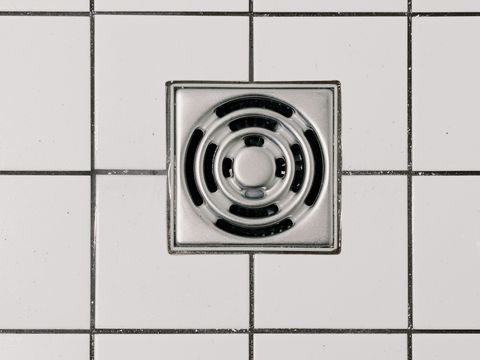
Find the overflow relief gully, the grated pipe near the kitchen or laundry. If its grate has lifted and sewage is spilling there, the main drain is blocked further down.
Look past your fence
If sewage is coming from a manhole in the street or a park, call your water company. Their number is on your water bill.
Wash up
Wash your hands well after any contact. Don't hose the spill into a stormwater pit or the gutter.
Signs the drain needs a plumber
- Water drains slowly from more than one sink, shower or bath.
- A drain gurgles when you flush the toilet or empty the bath.
- A sewage smell inside, or around the outside of the house.
- Water or sewage coming up through the overflow relief gully.
- The same drain blocks again within weeks of being cleared.
- Damp, sunken or unusually green patches along the line of the drain.
One drain or the main drain?
If only one fixture is slow, the blockage is usually in its trap or the short pipe behind it. Hair in a shower, fat in a kitchen sink and wipes in a toilet are the usual culprits.
If several fixtures are slow, or the toilet gurgles when the washing machine empties, look further along. The main drain carries everything from the house to the sewer, and it's where tree roots, broken pipes and years of build-up do their damage.
We have separate pages on kitchen sinks, shower drains, blocked toilets and tree roots.
What a plumber will do
A plumber will start by working out where the blockage sits: which fixtures are affected, where the inspection openings are, and what has happened before.
To clear it, a plumber will usually feed a drain machine (a motorised cable with a cutting head) through the pipe, or use a hydro jetter that scours the pipe with high-pressure water. If it keeps coming back, they'll put a camera down the drain to see why.
Clearing gets the water moving again. A cracked pipe, a sag that holds waste or roots growing through a joint will block again, and the fix for those is a repair or pipe relining.
What changes the job
- Access: an inspection opening in plain sight is quick to open, while one buried under paving or a garden bed has to be found first.
- The cause: a wad of wipes clears quickly, while years of grease or a root mass takes longer and may need jetting.
- The pipe: old clay pipes crack and let roots in at the joints, and a broken pipe means a repair rather than a clean.
- Whose pipe it is: if the blockage is in the water company's part, different rules apply.
- Timing: a drain that is slow but still draining can usually wait for a booked visit, while sewage coming up can't.
Who pays: your pipe or the water company's?
Where your part of the sewer ends and the water company's begins depends on which company serves you. There is no single national rule.
As a rough guide, the pipes from the house to the connection point are yours to maintain. Where that connection point sits is what changes: Sydney Water, for example, warns that your wastewater system "may extend beyond your property boundary".
If the blockage turns out to be in the water company's pipe, some companies repay part of the plumber's cost, but usually only if the plumber reports it to them at the time. Sydney Water accepts claims for reasonable out-of-pocket costs when the plumber reported the blockage, capped at "a maximum of 2 hours work". In WA, Water Corporation pays the plumber a standard fee for locating a blockage. Hunter Water tells customers to contact a licensed plumber, and that this "will be at your own expense".
Each company's rule is in our guide, who owns the sewer pipe.
What you can do first
You can
- Stop running water into the blocked drain, and note which fixtures are affected.
- Look at the overflow relief gully outside: is the grate sitting flat, wet, or pushed up?
- In WA, Building and Energy says homeowners may do "clearing a blocked fixture or waste pipe by using a plunger".
- In Queensland, the QBCC's DIY guide lists "cleaning or maintaining a ground-level grate for a trap on a sanitary drain" as work that needs no licence.
- In other states, check what you can legally do yourself before trying anything in the pipe.
- If you've already poured a drain cleaner in, tell the plumber before they open anything.
Leave to a licensed plumber
- Drain machines, cutters and jetters.
- Opening up pipes, and any repair or replacement.
- Sewage overflowing inside the house.
- In WA, everything outside the short homeowner list: all other sanitary and drainage plumbing "must be carried out by a licensed plumber or permit-holder".
Licences and paperwork
Each state licenses drain work its own way. In NSW, a contractor licence is needed for "all specialist work regardless of its cost", and drainage counts as specialist work. Queensland keeps an "Occupational plumber and drainer register" for checking a plumber or drainer. In WA, drainage plumbing has its own tradesperson's licence, and knowingly engaging an unlicensed person to do plumbing work is an offence.
If clearing turns into a repair, paperwork can follow. In NSW, the plumber or drainer lodges a Certificate of Compliance when the work is done and must give you a copy, and drainage work also needs a Sewer Service Diagram.
Our guides show how to check a plumber's licence and when you should get a compliance certificate.
Questions to ask the plumber
- Where exactly was the blockage, and what caused it?
- Is the pipe damaged, or only blocked?
- Was it on my side or the water company's, and did you report it?
- Can I see the camera footage, if you used one?
- What would stop it happening again?

What we would do
If one fixture is slow, do the simple checks and give it a day. If several are slow, the gully is wet, or sewage is anywhere it shouldn't be, stop using water and call a drain specialist. Ask them to find the cause as well as clear the pipe: a drain that blocks twice in a season usually has a problem a camera can show.