
If the gully is overflowing now
Stop using water inside, because everything you drain comes out here. Keep children and pets away, leave the grate where it is rather than forcing it down over sewage, and wear gloves near the spill. If sewage is coming out of a manhole in the street rather than your gully, ring your water company.
What the gully does
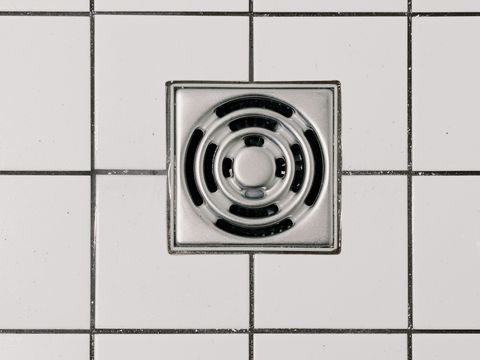
An overflow relief gully, often called an ORG, is a short pipe rising to ground level from your sewer drain, with a loose grate on top. It sits lower than your inside fixtures, so when the drain downstream blocks, sewage reaches the gully first and lifts the grate.
That's its job: it's the warning, and it keeps the mess outside. A gully buried under paving, hidden by a pot plant or with its grate fixed down can't do that job.
Many gullies hold water in a trap below the grate, which keeps sewer smells down. If that water dries out, you may notice a smell.
What a boundary trap is
Many older properties also have a boundary trap: a trap in the sewer drain near the front boundary, with a vertical shaft rising to a cap at ground level. It was fitted to stop sewer gas from the main getting into the house drain.
Everything leaving the house has to pass through its bend, so it's a common place for blockages. When it blocks, the gully overflows and every drain in the house slows. Not every home has one.
Signs to watch
- The gully grate has lifted or sits crooked.
- Water or sewage around the gully after the washing machine empties or someone showers.
- Water bubbles up into the gully when a toilet is flushed.
- A sewer smell near the gully or the front boundary.
- A missing or broken gully grate or boundary trap cap.
What a plumber will do
Find the blockage
Open the inspection shaft or boundary trap to see whether waste is backed up there or further down.
Clear it
Use a drain machine or jetter from the shaft or gully, working through the bend in the trap.
Check the pipe
Run a camera if it keeps happening, especially through an old boundary trap.
Put the gully right
Replace a broken grate or cap, and tell you if the gully has been buried or built over.
Whose gully, whose trap?
Your water company decides who owns these fittings, and some spell it out. Hunter Water says the owner's part "includes the boundary trap and inspection shaft". In WA, Water Corporation's diagram lists the "overflow relief gully, property sewer, inspection shaft, rising shaft, and property connection" as the owner's.
South East Water won't repay "Digs to find your inspection point or boundary trap", so knowing where yours sits can spare you that cost. Other companies set their own lines: see who owns the sewer pipe.
What you can do, and what to leave
You can
- Keep the gully visible and open to the air: no paving, soil or pot plants on top.
- In Queensland, the QBCC's DIY guide lists "cleaning or maintaining a ground-level grate for a trap on a sanitary drain" and "replacing caps to ground level inspection openings on a sanitary drain".
- Find your boundary trap's cap now, while nothing is overflowing.
- In WA, clearing a drain from the gully or boundary trap isn't on the homeowner list, so call a licensed plumber or permit-holder.
Leave to a licensed plumber
- Opening and clearing the boundary trap or inspection shaft.
- Clearing the drain with a machine or jetter.
- Raising or moving a gully that's been built over.
- Any repair to the trap or pipe.
Rules and paperwork
Raising, moving or replacing a gully or boundary trap is work on your sewer drain, so leave it to a licensed plumber or drainer. In NSW, drainage work needs a Sewer Service Diagram as well as the Certificate of Compliance, and the plumber or drainer has to give a copy to whoever arranged the work.
Our guides cover compliance certificates and checking a plumber's licence.
Questions to ask the plumber
- Where was the blockage: the boundary trap, or further down?
- Is my gully at the right height, and is its grate working?
- Does the boundary trap need repair or replacing?
- Whose side was the blockage on, and was it reported?

What we would do
Find your gully and boundary trap before you need them, and keep both clear and visible. If the gully overflows, stop using water and call a drain specialist. If it overflows again soon after, ask for a camera through the boundary trap, because old traps are a common spot for repeat blockages.