
Sewage coming up outside or in the house?
Report wastewater overflowing anywhere on your property to Water Corporation's faults line straight away: it's answered 24 hours a day, and the number is on your water bill. Stop running water and flushing until the blockage is found.
Where your part stops
Everything on your side of the sewer junction belongs to the owner: the gully outside, the pipe across the yard, the inspection shaft, the rising shaft and the connection itself. Water Corporation says it manages only half of the wastewater system, and the rest is on private property.
When a plumber traces the blockage past the junction into the main, the job changes hands. The plumber calls Water Corporation, a Water Corporation crew clears its sewer, and Water Corporation pays the plumber a standard fee for locating the blockage. Ask your plumber to follow that process rather than clearing the main themselves.
Some of Water Corporation's sewers run through back yards. Its sewer reticulation pipes, usually 300mm across or smaller, are the Water Corporation asset most often found on private land, and any digging, drilling or boring near one needs its written approval.
What Perth's water company says causes blockages
Grease causes 30% of them
Fats, oils and grease hardening in pipes cause 30% of Water Corporation's wastewater blockages. Pour cooking oil into a container and bin it.
No food waste disposers on the main
Water Corporation lists not using food waste disposal units that discharge into its main among an owner's responsibilities. Scraps belong in the bin or the compost.
Flushable wipes aren't
Its pipes are designed for pee, poo and toilet paper only. Wipes sold as flushable don't break down as easily as toilet paper and end up as blockages.
Plans that show your pipes
Before You Dig Australia plans show the mains and sewer junctions at your address. For the pipes inside your block, ask the Building Commission for the property's flimsy, a diagram of its sewers and fixtures.
Your overflow relief gully
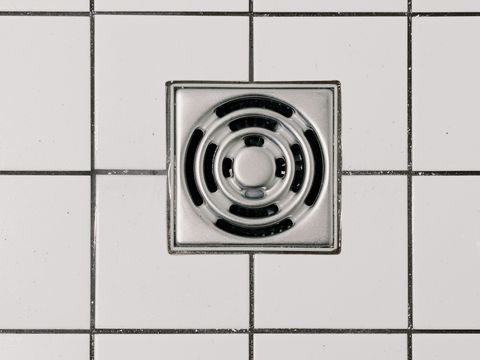
The overflow relief gully (ORG) is the grated drain outside, usually near the bathroom or laundry. In a blockage it lets wastewater escape outside rather than into the house, so Water Corporation asks owners to keep its loose grate able to pop off and clear of pot plants and leaf litter.
It also has to sit above the surrounding ground, so stormwater can't run into the sewer. That matters in a Perth winter: Perth Airport averages 153.5 mm of rain in June. A home with no ORG can have one fitted by a plumber, at the owner's cost. More on our overflow relief gully page.
What WA lets you do, and what it doesn't
You can
- Plunge a blocked fixture or waste pipe. It's on WA's homeowner list.
- Lift the ORG grate and clear leaves and pots off it.
- Stop using water while the drain is backing up.
- Find your Before You Dig Australia plan or flimsy so the plumber knows the layout.
Leave to a licensed plumber
- Clearing a drain any other way than with a plunger.
- Work on the property sewer, inspection shaft or connection.
- Fitting an ORG where there isn't one.
- Digging near a Water Corporation sewer, after its written approval.

What we would do
Look at the ORG first and tell the plumber what you see, and if sewage is coming out anywhere, ring Water Corporation before anyone else. When you book a drain plumber, ask whether they'll call Water Corporation if the blockage turns out to be in its sewer. Have your Before You Dig plan or flimsy ready. And keep grease and wipes out of the pipes afterwards, because Water Corporation's own figures put 30% of its blockages down to grease. We'll match you with a drain specialist who works under those rules.