
Blocked drains under Melbourne's rules
Three retailers, one bill
Greater Western Water, South East Water or Yarra Valley Water serves your home, depending on the suburb. A few suburbs, Clayton and Oakleigh among them, sit on two companies' lists, so go by the name on your water bill.
A full shaft tells you something
Greater Western Water says an inspection shaft that is full or holding water means the blockage is in its network, and the plumber should stop and call it.
Some older homes have no shaft
Greater Western Water notes that some older homes don't have an inspection shaft. Owners are expected to keep the shaft and its marker above ground, and to pay a licensed plumber to raise them if they're buried.
Stormwater is a different system
Councils run about 25,000 km of local drains and street gutters across Melbourne. A blocked pit in the street is the council's; downpipes and stormwater pipes on your land are yours.
Work out which side it's on
Check your bill
The retailer named there is the one whose rules apply, and the one to ring about its pipes.
Find the gully and the shaft
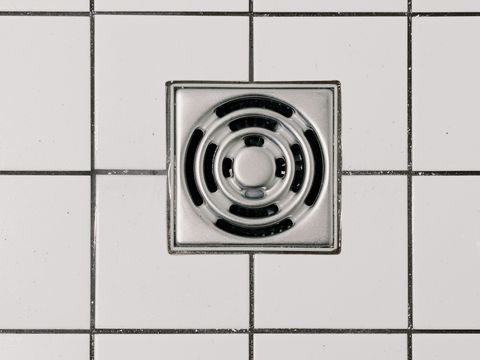
Both usually sit in the backyard near the laundry, kitchen or bathroom. The overflow relief gully has an open grate; the inspection shaft is a pipe set in concrete under a heavy metal lid marked IS.
Watch with the water off
Greater Western Water's guide: overflow only while taps, toilets or showers are running points to your pipes. Overflow that carries on with everything off points to the network.
Call the right one
If it looks like the company's side, ring the company first. If it's yours, you need a drain plumber. Keep away from any sewage that's spilling.
What each company expects
| What it asks of your plumber | If the blockage turns out to be its own | |
|---|---|---|
| South East Water | Rod from your boundary trap to South East Water's point, judging the distance by the cable length. Still blocked there? Call South East Water and leave its pipe alone. | It repays fair and reasonable costs of finding the blockage, except where it wasn't referred, or CCTV, a high-pressure jetter or root cutting was used. |
| Greater Western Water | Look in the inspection shaft first. Full or holding water means stop and call Greater Western Water. | Call-out costs up to a maximum of $500, once its own crew confirms the blockage. Not CCTV, jetting, private pipe work or exposing the shaft. |
| Yarra Valley Water | Ask Yarra Valley Water where its part starts at your address. Its own pages describe the boundary in two different ways. | If the blockage is yours, you pay a licensed plumber. It won't reimburse internal pipe repairs. |
Roots, trees and permits
When roots keep blocking the same line, taking the tree out can look like the answer. Since 15 September 2025, Clause 52.37 has been part of every Victorian planning scheme, and it requires a planning permit to remove, destroy or lop a canopy tree in specific circumstances. Councils can also have local laws on works near significant trees, so ask yours before any digging or felling.
Root cutting matters for the bill too: South East Water won't repay work where tree roots were cleared. Our tree roots page covers the repair options, and our national blocked drains guide has the signs and the safety steps.

What we would do
Before anyone feeds a cable down, find the inspection shaft and confirm which company you're with. If the shaft is full, or the gully keeps overflowing with every tap off, call the water company first. In South East Water's and Greater Western Water's areas, a plumber who clears their pipe instead of referring it can cost you the reimbursement. If it's your pipe, you want a drain specialist who knows all three networks' rules, and that's who we would match you with.