
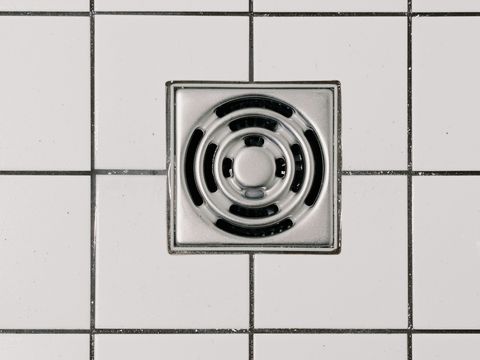
Signs to act on
- Water pools around your feet and takes minutes to clear.
- Water creeps out of the shower onto the bathroom floor.
- A sour or sewer smell coming from the grate.
- The shower gurgles when the toilet flushes or the basin empties.
- Damp skirting, lifting floor tiles or a musty smell in the next room.
What blocks a shower drain
Hair is the main one. It wraps around anything in the trap, and soap and conditioner bind it into a plug. Sand from the beach and grit from muddy feet settle on top.
If the shower and basin, or the shower and floor waste, slow down together, the blockage is further along the shared pipe. A gurgle when the toilet flushes points to the drain under the house rather than the shower.
Sometimes the drain is clear and the shower floor is the problem: it doesn't fall towards the waste, so water sits. That calls for a shower repair, not a drain clear.
What a plumber will do
Lift the grate
Take out the grate, or the tile insert on a hidden drain, and pull out what's sitting in the trap.
Clear the pipe
Run a small drain machine through the trap and along the waste pipe.
Test the shared line
Run the basin, bath and floor waste to see whether they share the blockage.
Look for leaks
If there's water in the floor or walls, check for a leaking waste or failed seal, or bring in leak detection.
What changes the job
- The grate: a screwed-down or tiled-in drain takes longer to open than a loose cover.
- Whether the house sits on a slab or has a floor you can get under.
- Whether the shower shares a pipe with the bath, basin or floor waste.
- Signs of water damage that need more than a drain clear.
- An older bathroom where the pipes are original.
What you can do, and what to leave
You can
- Pull hair off the top of the grate and wipe away soap build-up.
- Fit a hair catcher over the grate, and empty it into the bin.
- Run the shower briefly to see how fast it drains, and listen for gurgling elsewhere.
- In WA, plunging is on the homeowner list as "clearing a blocked fixture or waste pipe by using a plunger". In other states, check what you can do yourself first.
Leave to a licensed plumber
- Anything below the trap: drain machines and jetting.
- Lifting tiles, or a tiled-in grate.
- Leaks in the waste pipe, and anything inside the wall or floor.
- Moving the drain, or fitting a new shower.
Rules if the shower is being redone
Clearing a blockage is a repair. Moving a shower drain is new work, and the paperwork can change.
In NSW, "bathroom renovations where fixture locations are unchanged" don't need a Notice of Work before they start. If the shower or its drain is moving, ask the plumber what will be lodged and when you'll get your copy of the Certificate of Compliance.
In Victoria, plumbers are registered or licensed for each class of work, and only licensed plumbers can issue compliance certificates. To check the person doing the work, see how to check a licence.
Red flags
- Wants to re-tile the shower before checking the drain.
- Pours in chemicals instead of clearing the trap.
- Can't say whether the shower shares a pipe with anything else.
- No licence number, or one that doesn't match the business name.

What we would do
Clean the grate and fit a hair catcher; for a lot of slow showers, that's enough. If it's still slow, or water has reached the floor outside the shower, book a drain specialist soon. Water in the floor is a much bigger job than a blocked trap.