
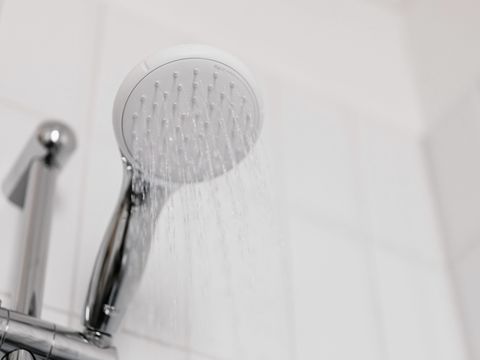
Signs your shower needs a plumber
- The shower keeps dripping from the head after you turn it off.
- The mixer is stiff, loose or hard to set to a steady temperature.
- The water turns hot or cold when someone uses another tap or flushes.
- Paint bubbling, skirting boards swelling or mould on the far side of the shower wall.
- A stain on the ceiling under an upstairs bathroom.
- Water pooling in the shower because it drains slowly: see blocked shower drains.
- A weak spray even though other taps are fine: start with shower heads.
What a plumber will do
For a dripping shower, a plumber will replace the cartridge in a mixer, or the washers and seats in older separate taps. Both are done from the front, through the tap's cover plate, so tiles stay put.
For hot and cold swings, the plumber will check the mixer cartridge, the tempering valve on the hot water side and the hot water system itself. A shower that only changes when the dishwasher or a toilet takes water can be a pressure balance problem rather than a faulty part.
For damp walls or ceilings, a plumber will test whether the water is coming from the pipes, the mixer body or the waste. A pressure test on the pipes and a look at the waste connection usually separate a plumbing leak from failed waterproofing. If the pipes test sound, the problem is the shower's waterproofing or grout, which is work for a waterproofer or tiler. Our hidden leaks page covers how leaks inside walls are found.
What changes the job
Mixer brand and age decide whether a cartridge is still available or the mixer body has to come out, which means opening the wall. An in-wall mixer with a separate diverter for a hand shower has more parts to check. Upstairs bathrooms and shared walls with a kitchen make leaks harder to trace. Moving the shower, or changing from a bath to a walk-in shower, is renovation work: see bathroom plumbing.
What you can check first
You can
- Run the shower and look for water escaping around the mixer plate or the head's arm.
- Unscrew the shower head and run the arm on its own: if the spray problem goes away, the head is the culprit.
- Note whether the temperature changes when someone else uses water. The plumber will ask.
- Shower heads are on the homeowner lists in Queensland and Western Australia. Other states set different limits; see what you can do yourself.
Leave to a licensed plumber
- Mixer cartridges and anything behind the cover plate.
- Tempering valves and the hot water supply.
- Pipes, joints and the waste connection inside the wall or floor.
- Any work where tiles have to come off.
The hot water limit at your shower
Showers are fixtures used for personal hygiene, so the building code limits the water delivered there to 50°C. NSW spells it out as 50°C at "showers, baths, handbasins and bidets". The control is usually a tempering valve near the hot water system, and whether a replacement system must have one depends on your state: see tempering valves.
The water in the tank is kept hotter, at 60°C or more, to control Legionella. That is why the fix for a scalding shower is a working temperature control device, never turning the hot water system down.
Licence and paperwork
In Western Australia, the pipes inside a shower wall are not on the homeowner list, and everything off that list must be done by a licensed plumber or permit-holder. In Victoria, only a licensed plumber can issue a compliance certificate. In South Australia, the plumber has 7 days from finishing to give you an electronic certificate of compliance for covered work. Our compliance certificate guide has the rest.
Red flags
- A plan to retile the whole shower before anyone has pressure tested the pipes.
- Turning the hot water system down to fix a scalding shower.
- Silicone run over a leaking mixer plate instead of finding the leak.
- No licence number on the quote or the invoice.

What we would do
Do not ignore damp on the other side of a shower wall: it rarely stops by itself and the repair grows the longer it runs. Get a plumber to test the pipes first, so you know whether you need a plumber, a waterproofer or both. For a drip or a stiff mixer, a cartridge is usually all it takes. Choose a plumber who repairs showers often, because they will recognise the mixer and know where its parts come from.