
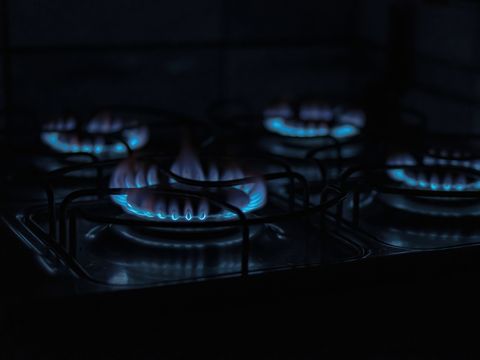
Smelling gas?
Clear everyone out of the area and don't touch switches or light anything. Shut the gas at the meter or cylinder if that's safe, then phone your distributor's or supplier's emergency line once you're outside. Leave the appliance off until a licensed gas fitter has found the cause.
Gas in Rockhampton
A natural gas network
The Queensland Government lists Rockhampton among the places with a natural gas distribution network. The Queensland Gas Pipeline runs 627km from Wallumbilla, near Roma, to Gladstone and Rockhampton.
Two distributors statewide
Queensland has 2 main natural gas distributors, Allgas Energy and Australian Gas Networks. Your gas bill tells you which one runs your connection.
LPG where mains gas isn't
Not every Queensland home can get mains gas, and those without it can use LPG, usually in bottles. Check which supply your house has before buying an appliance.
Matching the appliance to the gas
Natural gas and LPG need different burners, so an appliance set up for one won't run safely on the other without conversion. Conversions and installations must both be done by a licensed gasfitter in Queensland.
If you're connecting to mains gas for the first time, or moving an appliance from a bottled-gas house to a mains one, ask the fitter to check the data plate before anything is connected. See LPG conversions and gas cooktops.
Common Rockhampton gas jobs
- Replacing a gas hot water unit, which also needs Queensland's temperature control device.
- Installing or moving a cooktop, oven or space heater.
- Adding a bayonet fitting for a portable heater or barbecue.
- Converting an appliance between LPG and natural gas.
- Disconnecting and capping gas when you switch to electric.
Licences and paperwork
In Queensland, anyone who does gas work must hold the appropriate gas work licence or gas work authorisation. Not every licence covers every job, so check the holder's type on the RSHQ Portal, which you can search without an account.
If a business supervises or carries out gasfitting, it also needs a QBCC gasfitting licence alongside the occupational licence issued by the Chief Gas Examiner and Resources Safety and Health Queensland.
When an installation is finished, ask for a gas system compliance certificate. One may not be issued for service work or a basic repair, but you should be given an itemised tax receipt. Our guide to compliance certificates explains why to keep it.
After a flood
Queensland requires a licensed gasfitter to inspect gas installations and appliances that have been through a flood before they're used. Don't remove or repair gas pipework while cleaning up. If the network operator or LPG supplier finds the installation on your property unsafe, it stops the gas, and the owner pays a licensed gasfitter to test and repair it.
What's yours to do, and what isn't
You can
- Know where the gas meter or cylinder valve is, and how to turn it off.
- Check the 10-year test date stamped on any LPG cylinder before refilling it.
- Read appliance data plates for the gas type before you buy or move them.
Leave to a licensed plumber
- Every installation, connection and conversion.
- Gas pipe, regulator and bayonet work.
- Leak finding and repair.
- Reconnection checks after a flood.

What we would do
Check if the house runs on mains gas or LPG before you shop, and photograph the data plate on whatever you're replacing. Book a licensed gas fitter who does your kind of job often, check their gas work licence on the RSHQ Portal and the business's QBCC licence, and ask for the compliance certificate before you pay for an installation. If floodwater has reached any part of the gas system, wait for the inspection.