
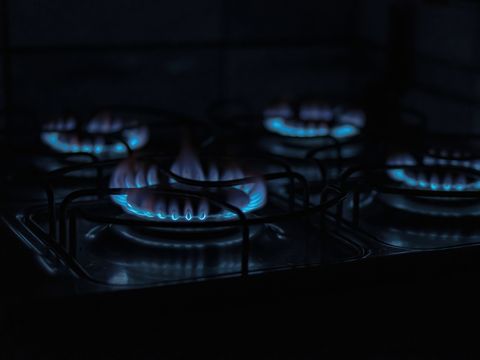
If you can smell gas
Get out and keep others out. Leave switches alone and don't strike anything that could spark. Once outside, call the emergency number printed on your gas bill. A licensed gas fitter can then find and fix the leak.
Gas in Bundaberg
The Wide Bay network
Australian Gas Networks owns the Wide Bay Distribution Network, a natural gas network of about 185 km. It covers Bundaberg, excluding Bundaberg port, along with Maryborough, Urangan and Hervey Bay.
Not every street
A network covering the town doesn't mean every street has a main. Ask the network or a gas retailer to confirm supply at your address before you plan a new gas appliance.
Mostly owner-occupied houses
At the 2021 Census, 85.0% of homes in the Bundaberg council area were separate houses and 40.1% were owned outright, so most gas jobs are on a single home's own meter and pipes.
Who may do gas work in Queensland
Under the Petroleum and Gas (Production and Safety) Act 2004, gas work covers installing, removing, altering, repairing, servicing and testing a gas system. For a type A gas device, meaning one prescribed by regulation that uses fuel gas for heat, light or power, the worker needs a gas work licence that allows the work; the maximum penalty is 500 penalty units.
The licence has to match the job, because Business Queensland notes that not all holders may do all types of gas work. The state's chief inspector keeps a register of gas work licences, and you can search current holders on the RSHQ Portal with no account.
What you should get when the job is done
Once an installation is finished, the gas fitter issues the owner an original copy of the gas system compliance certificate through the RSHQ Portal. If your gas comes from the Wide Bay network, its operator gets a copy as well.
A defect notice is how a gas fitter puts a safety concern in writing, and they must give you one if they find a problem. Physical compliance plates are no longer needed for most installations since the July 2025 change.
Work to hand to a licensed gas fitter
- A new or moved gas cooktop
- Gas hot water, storage or continuous flow
- A bayonet for a portable gas heater
- Converting an appliance between gas types, such as LPG conversion
- A safety check on older appliances
- Capping a line when you disconnect gas
Ask the gas fitter
- Does your gas work licence cover this type of appliance?
- Is this property on the Wide Bay network, or on bottled LPG?
- Will the compliance certificate be issued to me through the RSHQ Portal?
- If the appliance fails your check, what does the defect notice say?

What we would do
Check the licence on the RSHQ Portal before anyone starts, and make sure its type matches your appliance. Ask whether the house runs on Wide Bay natural gas or bottled gas, since appliances are set up for one or the other. When the work is done, keep the compliance certificate with your house papers: with most plates gone, it is the record that the job was signed off.