
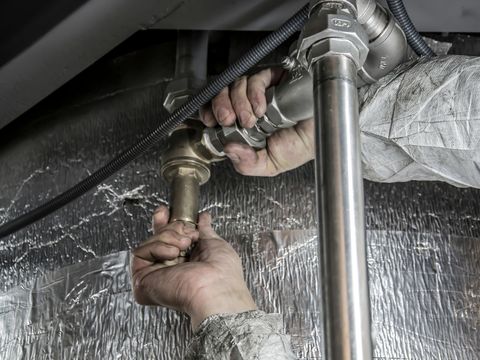
When an inspection is worth it
- You are about to buy, especially an older home with original pipes.
- You are buying a rental and want to know what the minimum standards will ask of you.
- The water bill has jumped and nobody can find a leak.
- Drains keep blocking, or there is a sewer smell you cannot trace.
- A previous owner did renovations and you have no paperwork for them.
What a plumber will look at
Hot water: the type, the age on its label, any leaks or rust at the base, the relief valve, and whether there is a tempering valve.
Fixtures: every tap, toilet and shower, for drips, running cisterns, weak flow and loose fittings.
Pipes: what the visible pipes are made of and their condition, under sinks, at the meter and under the house where it can be reached.
Hidden leaks: a water meter test with everything turned off. Movement on the meter means water is escaping somewhere.
Drains: how fast fixtures drain, the gully outside, and signs of root trouble or broken pipes such as soggy patches and recurring blockages.
What an inspection cannot see
Pipes inside walls and under slabs can only be judged by their signs: stains, damp, low pressure or a meter that moves. Underground drains need a camera to see properly, so if trees are close to the sewer line or the drains are old, ask for a CCTV drain inspection as well. Gas appliances and gas pipes need a licensed gas fitter; see gas safety checks.
Worth knowing before you buy
Victorian homes with gas hot water: from 1 March 2027, a gas hot water system in an existing home must be replaced with an efficient electric option when it reaches the end of its life. It can still be repaired if it breaks down. The age of the system tells you roughly when that choice will come; check the current rules on our Victorian gas hot water rule page.
Victorian rentals: new minimum standards start on 1 March 2027. When a rental's hot water "permanently fails and can't be repaired", the replacement must be "an efficient heat pump water heater or an electric-boosted solar water heater". From that date, a new rental agreement also needs "4-star WELS" shower heads, or 3-star if 4-star cannot be installed.
The sewer pipe: which part of the sewer line the owner looks after depends on the water company, and the boundary differs between them. See who owns the sewer pipe.
Ask the seller for the paperwork
If the seller has replaced the hot water, redone a bathroom or had drainage work done, the plumber may have had to provide paperwork, depending on the state and the job. In NSW, the plumber lodges a Certificate of Compliance and gives a copy to the person who arranged the work. In Queensland, the customer gets a copy of the registration for notifiable work. In Western Australia, major work comes with a certificate of compliance to the owner or occupier. South Australia's plumbers issue an electronic certificate of compliance, and in Victoria, compliance certificates come from licensed plumbers.
Missing paperwork is not proof of bad work, but it is a good question to ask. Our compliance certificate guide explains each state.
What you can check at an open inspection
You can
- Run each tap and flush each toilet. Listen for cisterns that keep running.
- Look in the cupboards under sinks for stains, swollen boards or rust.
- Read the label on the hot water system for its make and manufacture date.
- With the seller's permission, check the water meter with every tap off. Our leak check shows how.
Leave to a licensed plumber
- Pressure testing pipes.
- Checking the hot water system's valves and the tempering valve.
- Camera inspections of drains.
- Judging whether old pipes need replacing soon.
Questions to ask the plumber
- Will I get a written report with photos?
- Is a drain camera included, or is it a separate job?
- Which problems need fixing now, and which can wait?
- How old is the hot water system, and what is its likely next step?
- Can you look up the licence of whoever did recent work, if the seller has their details?

What we would do
If you are buying an older home, get a plumbing inspection and a drain camera before you commit, because a general building check may only touch on pipes and drains. In Victoria, find out the age and fuel of the hot water system, since a gas unit near the end of its life means an electric replacement. Ask the seller for certificates from any recent plumbing work. A plumber who inspects homes regularly will tell you plainly what matters and what can wait.