
Why relining comes up so often in Adelaide
Clay under the house
SA's plumbing code says vitrified clay pipes must not be used for drains under buildings unless they have been renovated with cured in-place pipe (CIPP) relining. Clay is not allowed above ground at all.
Trees the law protects
A tree with a trunk of 1 metre or more around, measured 1 metre above the ground, is regulated. City of Marion's fact sheet says earthworks within its Structural Root Zone or Tree Protection Zone need approval.
Roots alone won't get a tree removed
City of Salisbury says root damage to underground pipes, by itself, isn't sufficient justification to remove a regulated or significant tree. Fixing the pipe is often the realistic option.
Tea Tree Gully's newer pipes
On properties converted from the old CWMS, SA Water owns the new on-property pipes it laid, recorded as an encumbrance, and relocating any of them needs its approval.
Make sure it's your pipe to reline
Only reline the drain you're responsible for. We couldn't read SA Water's general rule on where its sewer ends, and SA's code lets a utility's inspection point sit inside or outside your boundary, so don't guess from the fence line. Ask SA Water if the damage is near or past your inspection point.
In a group of units or townhouses, a shared drain may belong to several owners, so agree on the work before it starts. Our guide to who owns the sewer pipe explains the questions to ask.
How a relining job usually runs
Camera inspection
A CCTV drain inspection shows the cracks, root entry or displaced joints, and whether the pipe still has its shape.
Cleaning the line
Roots and build-up are cleared, often by hydro jetting. If the roots belong to a protected tree, ask your council whether that needs approval.
Lining and curing
A resin-soaked liner goes into the old pipe and hardens in place, forming a new pipe inside it.
Reopening and checking
Branch connections are reopened and a second camera run confirms the result. Drainage work like this is on SA's eCOC list, so expect a certificate within 7 days.
When digging is still the answer
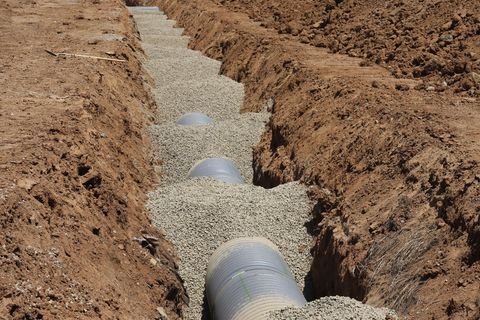
Relining needs a pipe that still holds its shape. A fully collapsed section, a badly sagging run that holds water, or a drain that needs rerouting usually means excavation. If that excavation falls near a protected tree, talk to your council before the trench is dug. Our guide to relining versus replacement sets out the trade-offs.
Questions to ask a relining plumber
- Can I see the camera footage, before and after?
- Is this section mine, or could it be SA Water's?
- Is any of the drain under the house clay, and will the liner cover it?
- Is there a regulated tree near the line, and does the work need council approval?
- What warranty comes with the liner, and will I get an eCOC?

What we would do
Get the camera footage before you agree to anything, and keep a copy. Confirm the damaged section is yours, especially near the inspection point. If a big tree is involved, assume the council will care about its roots and ask first. Then compare relining with digging on the evidence, using a relining specialist who will also tell you when relining isn't the right fix.